Smartphone Camera Specs Explained: Megapixels, Aperture, Sensor Size & OIS
📱 The Complete Guide to Smartphone Camera Specifications: Keys to Professional Photography
In the smartphone world, the camera has become a critical selection criterion. But with terms like megapixels, aperture, sensor size, and OIS becoming common, understanding these specifications is essential for choosing the right phone. In this comprehensive guide, we'll explain in detail the most important smartphone camera specs and how they affect your photo quality.
🔍 Megapixels: The Truth Behind the Marketing Number
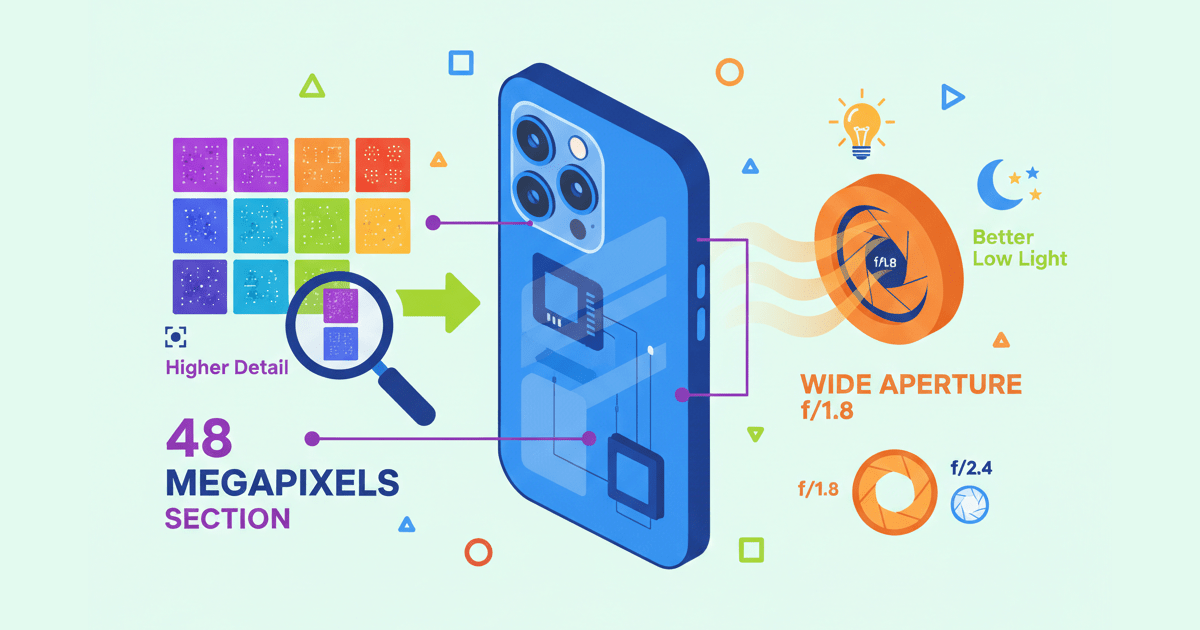
Megapixels are the most famous and marketed smartphone camera specification, but is it enough alone to judge quality? Megapixels represent image resolution and the number of light points (pixels) the camera can capture. The higher the megapixel count, the more the image can retain details when zoomed.
But the important warning: Higher megapixels don't necessarily mean better image quality. A phone with 12 megapixels and a large sensor may produce better photos than a phone with 108 megapixels and a small sensor. The key is balance between megapixel count, sensor size, and lens quality.
💫 Aperture: The Gateway for Light Entry
Aperture, represented by the f/ number (like f/1.8 or f/2.2), is an opening in the lens that controls the amount of light reaching the sensor. A smaller number means a larger aperture and more light.
Advantages of wider apertures (like f/1.8):
- ✨ Better performance in night photography and low light
- 🌸 Creating beautiful bokeh (blurred background) effect
- ⚡ Higher shutter speed to freeze motion
Modern flagship phones reach apertures of f/1.5 or even wider, making them excellent for night photography.
📐 Sensor Size: The Most Important Factor Few Talk About
Camera sensor size is the secret to high-quality images. A larger sensor collects more light, which means:
- 🎯 More accurate details and colors
- 🌙 Excellent performance in night photography
- 🔇 Better control of digital noise
- 📊 Wider dynamic range (better details in bright and dark areas)
Professional phone sensors like Sony IMX989 reach 1-inch, while most mid-range phones use smaller sensors.
🎬 Optical Image Stabilization (OIS): The Secret to Steady Photos and Smooth Videos
Optical Image Stabilization (OIS) is a mechanical system that compensates for hand movement during photography. A phone camera with OIS actually moves to counter vibrations.
Benefits of OIS:
- 📸 Sharper photos without shake, especially in low light
- 🎥 More stable and smooth videos
- ⏱️ Ability to use slower shutter speeds without vibration effect
Modern phones add Electronic Image Stabilization (EIS) with OIS for perfect results, especially in video recording.
✅ How to Choose Your Phone Based on Camera Specifications?
To choose a phone with an excellent camera, look for:
- Balance between specifications: Don't focus on megapixels alone
- Wide aperture lens (f/2.0 or lower) for night photography
- Large sensor size for overall image quality
- OIS for stable photos and videos
- Reviews and practical tests before purchasing
🎯 Conclusion: Integrated Specifications Produce Exceptional Photos
The ideal smartphone camera combines a large sensor, wide aperture, appropriate megapixel count, and an effective optical stabilization system. When comparing phones, look at the complete picture, not just one specification. Remember that software and image processing (like Google Pixel or Apple algorithms) play a major role in the final result.
✨ With proper understanding of these specifications, you'll be able to choose the phone that suits your photography needs, whether you're a professional or an amateur looking for the best daily photos.