Smartphone Screen Comparison: AMOLED vs OLED vs LCD - Choose Best Phone Display
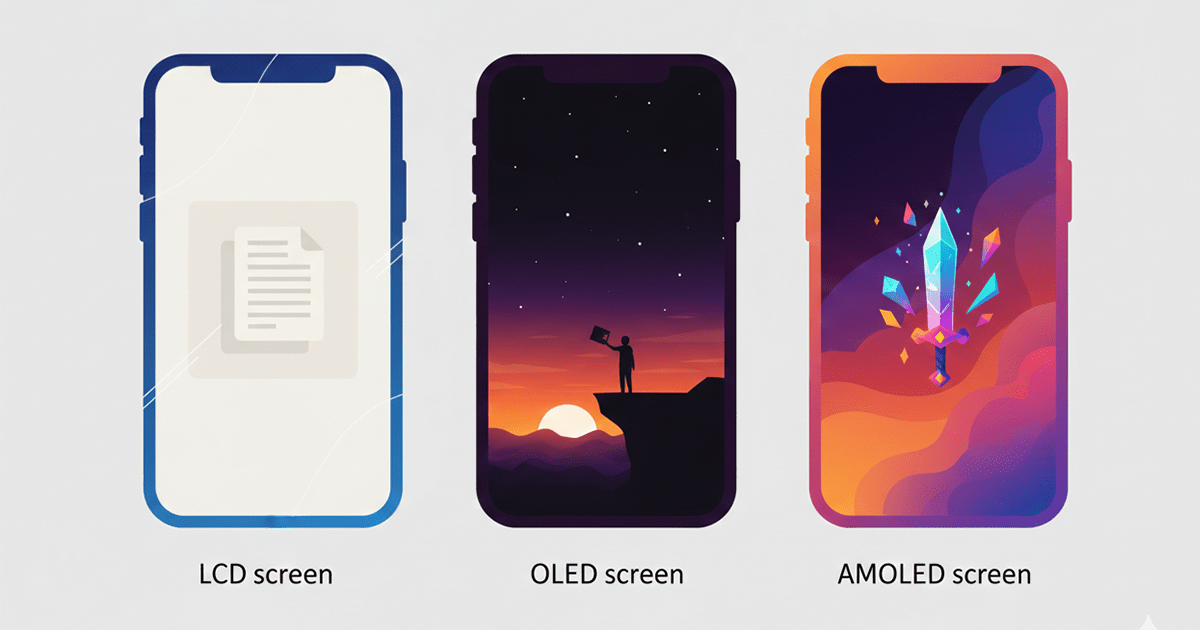
📱 Smartphone Screen Guide: AMOLED vs OLED vs LCD - Which is Best for Your Phone?
When buying a new smartphone, the phone screen is one of the most important factors affecting your experience. With multiple technologies like AMOLED, OLED, and LCD, the choice becomes confusing. In this comprehensive guide to explaining smartphone screen specifications, we compare the most common technologies in the smartphone market, focusing on practical user needs.
💡 LCD Phone Screens: The Economical and Durable Choice
LCD (Liquid Crystal Display) screens are still present in many mid-range and budget smartphones. They rely on a backlight that illuminates a layer of liquid crystal.
✅ Advantages of LCD in Smartphones:
- Lower price making phones more affordable
- Good performance under direct sunlight
- No screen burn-in issues
- Longer battery life in some cases compared to AMOLED screens
- Natural and accurate colors suitable for reading and office tasks
❌ Disadvantages of LCD in Smartphones:
- Black color isn't deep (appears grayish)
- Greater thickness limiting modern phone designs
- Higher power consumption with light backgrounds
- No support for features like Always-On Display
💎 OLED Phone Screens: Premium Quality and Slim Design
OLED (Organic Light-Emitting Diode) technology has moved from premium phones to mid-range categories. Each pixel lights up independently allowing complete turn-off.
✅ Advantages of OLED in Smartphones:
- Infinite contrast with deep absolute black
- Slimmer design suitable for slider phones and foldable phones
- Energy saving when using dark mode in apps
- Wide viewing angles without color distortion
- High response speed suitable for mobile gaming
❌ Disadvantages of OLED in Smartphones:
- Risk of screen burn-in with apps having static elements
- High repair costs if the screen breaks
- Performance affected under strong sunlight
🚀 AMOLED Phone Screens: The Technological Peak for Smartphones
AMOLED (Active-Matrix Organic Light-Emitting Diode) is the advanced version of OLED specifically designed for smartphones. Used by companies like Samsung in Galaxy phones.
✅ Advantages of AMOLED in Smartphones:
- All OLED advantages with power consumption improvements
- Vibrant and saturated colors perfect for video watching on YouTube
- Advanced support for technologies like under-display fingerprint
- High energy efficiency with Always-On Display feature
- High refresh rate up to 120Hz in advanced phones
❌ Disadvantages of AMOLED in Smartphones:
- Higher cost reflected in phone price
- Some users complain of eye strain over long periods
- Need to adapt to vibrant colors if accustomed to LCD
⚖️ Practical Comparison: Which Phone Screen Should You Choose?
1️⃣ Display Quality and User Experience:
AMOLED offers the best experience with vibrant colors and high contrast. OLED comes second with exceptional quality. LCD suits users who prefer natural colors.
2️⃣ Battery Life and Energy Saving:
AMOLED provides the best performance with dark mode. OLED offers good energy savings. LCD consumes constant power regardless of content.
3️⃣ Price and Economic Feasibility:
LCD in mid-range and budget phones ($200-500). OLED in mid-range to premium phones ($500-1000). AMOLED in flagship phones (above $1000).
4️⃣ Durability and Problem Resistance:
LCD is more durable long-term. OLED and AMOLED may suffer from screen burn-in with intensive use.
🛠️ Modern Smartphone Screen Technologies
✨ Super AMOLED Screens: Samsung's Special Evolution
Enhanced version of AMOLED combining touch layer and display in one layer, reducing reflections and improving sunlight visibility.
🌈 Dynamic AMOLED Screens: HDR10+ Support
Offers higher color dynamics with HDR10+ support and 42% blue light reduction for eye protection.
🔋 LTPO OLED Screens: Smart Energy Saving
Technology allowing variable refresh rate from 1Hz to 120Hz, significantly saving battery consumption.
📌 Tips for Choosing the Right Phone Screen
Choose a phone with LCD screen if:
- Your budget is limited and you want best value for money
- You use the phone extensively for reading and office tasks
- You live in a sunny area and use the phone outdoors frequently
- You fear screen burn-in issues with long-term use
Choose a phone with OLED/AMOLED screen if:
- You enjoy watching movies and series on your phone
- You use dark mode in most of your apps
- You care about slim phone design and curved screens
- You play mobile games frequently and want high response speed
❓ FAQs About Phone Screens
Q: What's the difference between OLED and AMOLED in phones?
A: AMOLED is an advanced type of OLED specifically designed for phones, with improvements in power consumption and color quality.
Q: Which screen lasts longer in phones?
A: LCD screens practically last longer without issues, while OLED and AMOLED screens may suffer from burn-in after 2-3 years of intensive use.
Q: Do AMOLED screens harm eyes?
A: Most modern screens have technologies to protect eyes from blue light, but prolonged use of any screen may cause strain.
📝 Conclusion: A Technology for Every User
Ultimately, choosing a phone screen depends on your personal priorities and daily use. AMOLED screens offer the best visual experience and technical advantages, but come at a higher price. OLED screens provide a good balance between quality and price. LCD screens remain the optimal choice for those seeking economic value and long-term durability.
Before buying, try the phone personally in the store, test the screen under different lighting, and make sure it suits your eyes and usage. Remember that the screen is your gateway to the digital world, so choose wisely.